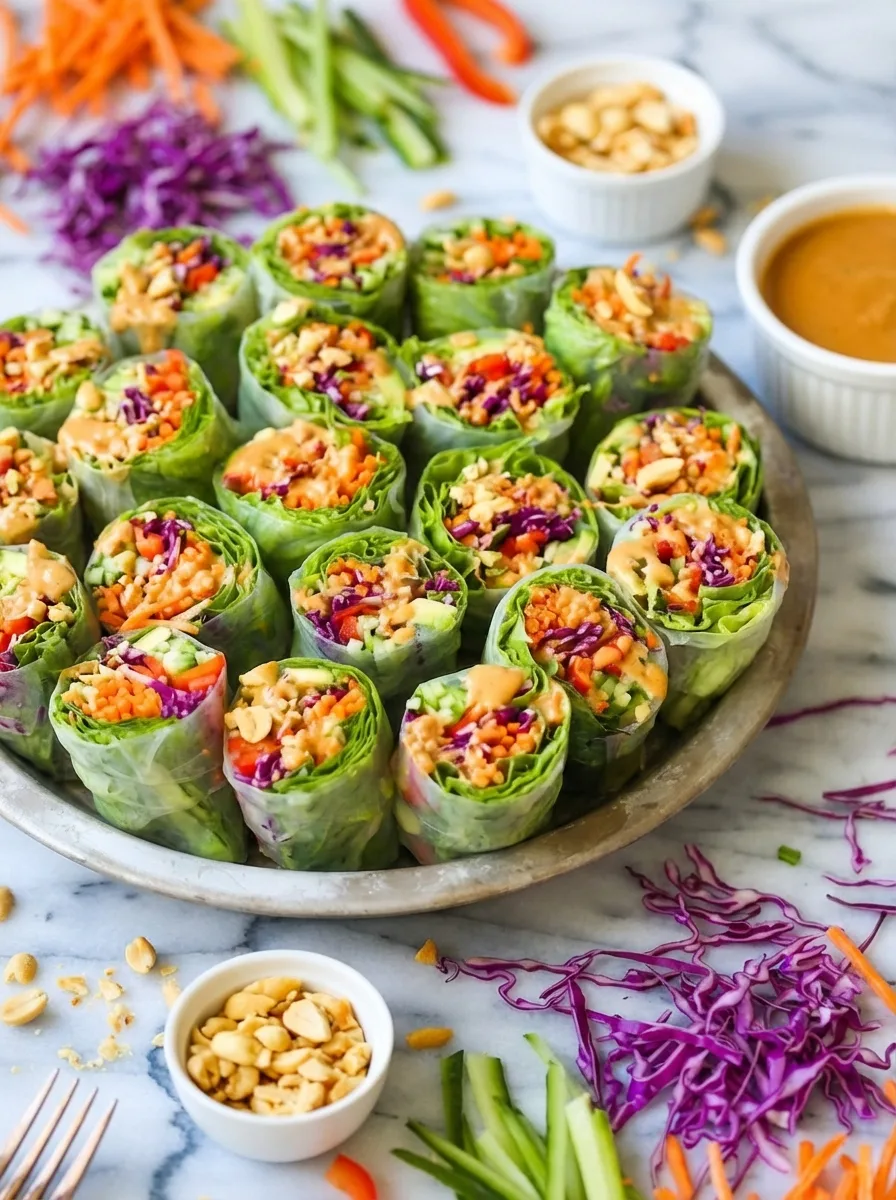
These fresh vegetable spring rolls bring vibrant colors and crisp textures to your table in just 30 minutes. Packed with garden-fresh produce and wrapped in delicate rice paper, they make the perfect light meal or appetizer.
Paired with a creamy peanut dipping sauce, this recipe turns simple ingredients into an exciting culinary experience that’s naturally vegetarian.
Why You’ll Love This Vegetable Spring Roll Recipe
Fresh spring rolls offer multiple benefits beyond their delicious taste. First, they come together quickly with no cooking required.
Second, they provide a smart way to use seasonal vegetables. Third, the peanut sauce adds protein and rich flavor without heavy oils.
Moreover, you can customize them based on what vegetables you have available. Many people enjoy how portable they make healthy eating – wrap them securely and take them to work or picnics.
Crowd-Pleasing Appetizer
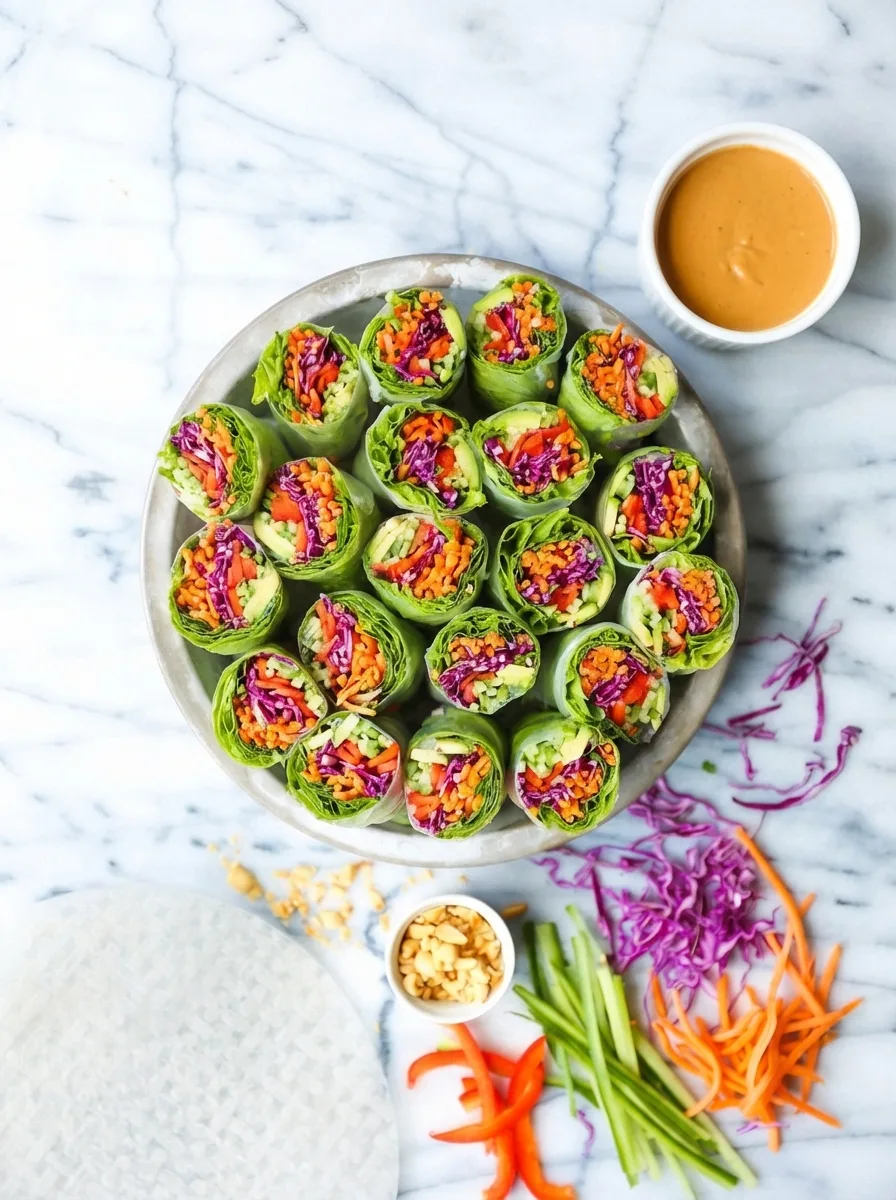
Spring rolls work wonderfully for entertaining because they look impressive yet require minimal effort. The colorful vegetables create a beautiful presentation when arranged on a platter. Unlike many party foods, these stay light and refreshing.
Nutrient-Packed Meal
Each roll delivers vitamins from the fresh vegetables, healthy fats from avocado and peanut butter, plus fiber for digestion. They contain less than 200 calories per serving but keep you satisfied for hours.
Recipe
Print
Vegetable Spring Rolls with Peanut Sauce
- Total Time: 30 min
- Yield: 8 servings 1x
- Diet: Vegetarian
Description
Fresh vegetable rice paper rolls with creamy peanut dipping sauce – ready in 30 minutes
Ingredients
- 8 to 10 10-inch rice paper wrappers
- 5 green leaf lettuce leaves (torn into large pieces)
- 1 cup fresh basil leaves
- 3/4 cup fresh mint leaves
- 3/4 cup chopped fresh cilantro leaves
- 1 cup matchstick carrots (100 g)
- 1 cup shredded purple cabbage (90 g)
- 1 red bell pepper (thinly sliced)
- 1/2 English cucumber (seeded and cut into long matchsticks)
- 1 avocado (halved, peeled, seeded and thinly sliced)
- Kosher salt and freshly ground black pepper (to taste)
- 1/4 cup creamy peanut butter (60 g)
- 4 teaspoons tamari (20 ml)
- 1 tablespoon freshly squeezed lime juice (15 ml)
- 2 teaspoons brown sugar (8 g)
- 1 teaspoon chili garlic sauce (5 g)
- 1 teaspoon freshly grated ginger (3 g)
Instructions
- Working one at a time, wet rice paper for 10-15 seconds and transfer to a work surface
- Place lettuce, basil, mint and cilantro in the center of each wrapper
- Top with carrots, cabbage, bell pepper, cucumber and avocado
- Season with salt and pepper
- Bring bottom edge tightly over filling
- Fold sides toward center
- Roll from bottom to top carefully
- Cover completed rolls with damp paper towels
- Repeat with remaining wrappers and filling
- Combine peanut butter, tamari, lime juice, brown sugar, chili sauce and ginger in bowl
- Whisk sauce until smooth
- Serve rolls immediately with peanut sauce
Notes
- Assemble rolls just before serving for best texture
- Keep completed rolls covered with damp towels to prevent drying
- Adjust chili garlic sauce quantity for desired spice level
- Add warm water to peanut sauce for thinner consistency
- Prep Time: 30 min
- Category: Main Course
- Method: Baked
- Cuisine: American
Nutrition
- Serving Size: 1 roll + sauce
- Calories: 175
- Sugar: 4g
- Sodium: 220mg
- Fat: 8g
- Saturated Fat: 1.3g
- Unsaturated Fat: 2.6g
- Trans Fat: 0g
- Carbohydrates: 22g
- Fiber: 5g
- Protein: 4g
- Cholesterol: 0mg
Ingredients and Substitutions
The beauty of spring rolls lies in their flexibility. Use these suggestions to adapt the recipe based on seasonal availability and personal preferences.
Base Components
- Rice paper wrappers – The essential vehicle for your fresh fillings, available in most grocery stores’ Asian food sections
- Leafy greens – Green leaf lettuce provides crunch, but butter lettuce or spinach also work well
- Fresh herbs – Basil, mint, and cilantro create aromatic brightness
Vegetable Fillings
- Matchstick carrots – Buy pre-cut or julienne whole carrots
- Purple cabbage – Adds beautiful color contrast and crunch
- Red bell pepper – Thin slices add sweetness and vibrant red hues
- English cucumber – Seedless variety prevents sogginess
- Avocado – Creamy texture balances crisp vegetables
Sauce Components
- Creamy peanut butter – Natural unsweetened variety works best
- Tamari – Adds umami depth (gluten-free alternative to soy sauce)
- Lime juice – Fresh squeezed brings zesty brightness
- Brown sugar – Balances acidity and spice
- Chili garlic sauce – For mild heat (adjust quantity to preference)
- Ginger – Freshly grated adds warmth and complexity
How to Make Vegetable Spring Rolls
Learning the wrapping technique might take a few attempts, but soon becomes second nature. Follow these simple steps for perfect rolls every time.
Preparation Steps
1. Prepare all vegetables before handling rice paper wrappers. Having ingredients sliced and organized makes assembly efficient.
2. Fill a pie plate or shallow dish with warm water. This container should be slightly wider than your rice paper wrappers.
3. Lay clean kitchen towels nearby for workspace management. Keep finished rolls covered with slightly damp paper towels.
Assembly Technique
1. Working one wrapper at a time, submerge rice paper completely in warm water for 10-15 seconds until pliable but not fully soft.
2. Transfer damp wrapper to your work surface. Smooth out any wrinkles gently – it will continue softening as you assemble.
3. Layer lettuce leaves first near the bottom third of the wrapper. Top with basil, mint, and cilantro leaves for fresh herbaceous notes.
4. Arrange carrot matchsticks, purple cabbage shreds, bell pepper slices, cucumber sticks, and avocado pieces vertically over the herbs.
5. Lightly season vegetables with salt and pepper before wrapping.
6. Fold the bottom edge tightly over the filling, tucking it under slightly. Bring left and right sides toward the center before rolling upward until sealed. The rice paper naturally sticks to itself when properly dampened.
Sauce Preparation
1. Combine peanut butter, tamari, lime juice, brown sugar, chili garlic sauce, and ginger in a small bowl.
2. Whisk until completely smooth, adding warm water one teaspoon at a time to reach dipping consistency.
3. Taste and adjust seasonings, adding more lime for acidity or brown sugar for sweetness as desired.
Pro Tips for Success
Prevent Torn Wrappers
Rice paper becomes increasingly delicate as it absorbs water. Limit soaking time to 10-15 seconds and handle gently. If a wrapper develops small tears, patch with a soaked piece from a damaged wrapper.
Maintain Freshness
Spring rolls taste best when eaten immediately, but you can prepare components ahead. Store sliced vegetables in airtight containers with damp paper towels for up to 24 hours. Assemble wraps within 30 minutes of serving for ideal texture.
Flavor Variations
Protein Additions
While delicious as vegetarian appetizers, these rolls easily accommodate proteins like shredded chicken, seafood alternatives, or baked tofu. Serve them alongside our flavorful Peruvian chicken dish for a complete meal experience.
Extra Crunch
Add texture contrast with crushed peanuts, crispy fried onions, or julienned jicama inside the rolls or sprinkled over the peanut sauce.
Dipping Alternatives
While peanut sauce remains classic, you might try sweet chili sauce, hoisin-based dips, or a creamy avocado dressing. Each sauce brings different flavor dimensions to the fresh vegetables.
Serving Suggestions
Fresh spring rolls naturally pair well with Asian-inspired main courses. Create a balanced meal by serving them before our favorite baked chicken tzatziki casserole or alongside simple grilled proteins. For dessert, complement the meal with this light gluten-free strawberry cake.
Plating Ideas
Arrange whole rolls or cut diagonally to showcase colorful fillings. Serve sauce in small ramekins for individual dipping or drizzle attractively across plates. Garnish with extra herbs and sesame seeds.
Balanced Menu
Spring rolls work beautifully as appetizers, light lunches, or part of shared meal spreads. Pair with hot soups, fried rice, or noodle dishes for temperature and texture variety.
Storage and Freezing Instructions
Proper storage technique maintains freshness and prevents sticking.
Refrigeration
Store assembled rolls in the refrigerator wrapped tightly in damp paper towels inside an airtight container for up to 6 hours. The peanut sauce can be made ahead and refrigerated up to 5 days in a sealed jar.
Freezing
Freezing fresh spring rolls isn’t recommended as vegetables become watery and rice paper turns rubbery upon thawing. Instead, freeze extra peanut sauce or prepare fresh wrappers as needed.
Nutrition Facts per Serving
| Calories | Fat | Carbs | Protein | Fiber | Sugar | Sodium |
|---|---|---|---|---|---|---|
| 175 | 8g | 22g | 4g | 5g | 4g | 220mg |
FAQs About Vegetable Spring Rolls
Can I Use Different Wrappers?
Traditional rice paper works best for fresh rolls. While you might find tapioca-based wraps, these often become sticky. Don’t substitute egg roll wrappers – designed for frying, they won’t work for fresh preparations.
Why Do My Rolls Tear?
Tearing generally comes from over-soaking wrappers or overfilling them. Start with less filling than you think you need until master the rolling technique. The wrapper should stay pliable enough to stretch gently as you roll.
How Do I Keep Rolls From Sticking?
Store prepared rolls with parchment paper between layers. Before serving, brush with small amount of oil if needed. Use slightly damp towels during prep to prevent sticking without making wrappers soggy.
Final Thoughts
These vegetable spring rolls with peanut sauce offer a delicious way to enjoy fresh produce in a fun, handheld format.
The recipe requires minimal cooking skills yet delivers restaurant-quality results. With options to customize fillings and adjust spice levels, it accommodates various dietary preferences while providing a nutritious meal option.
Try preparing the peanut sauce ahead for quick weekday lunches, or assemble a platter for your next gathering and watch them disappear.