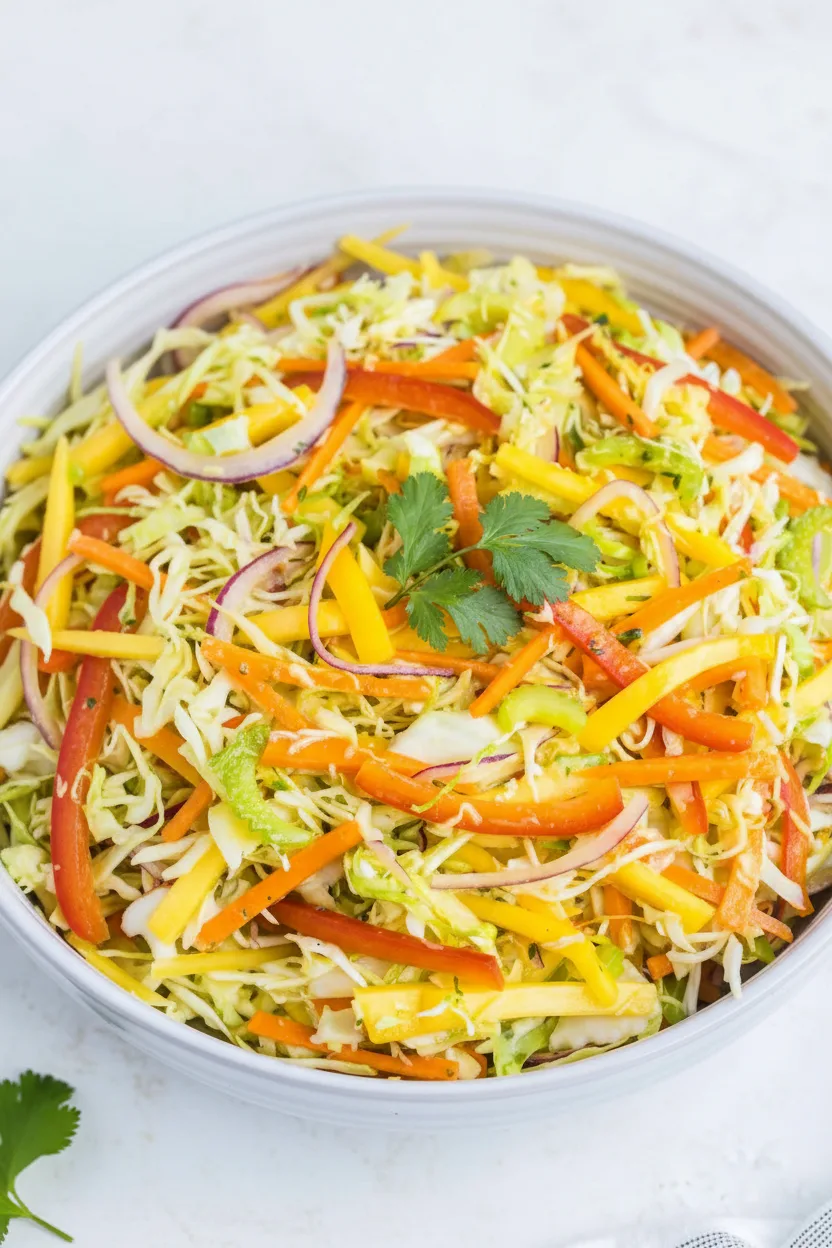
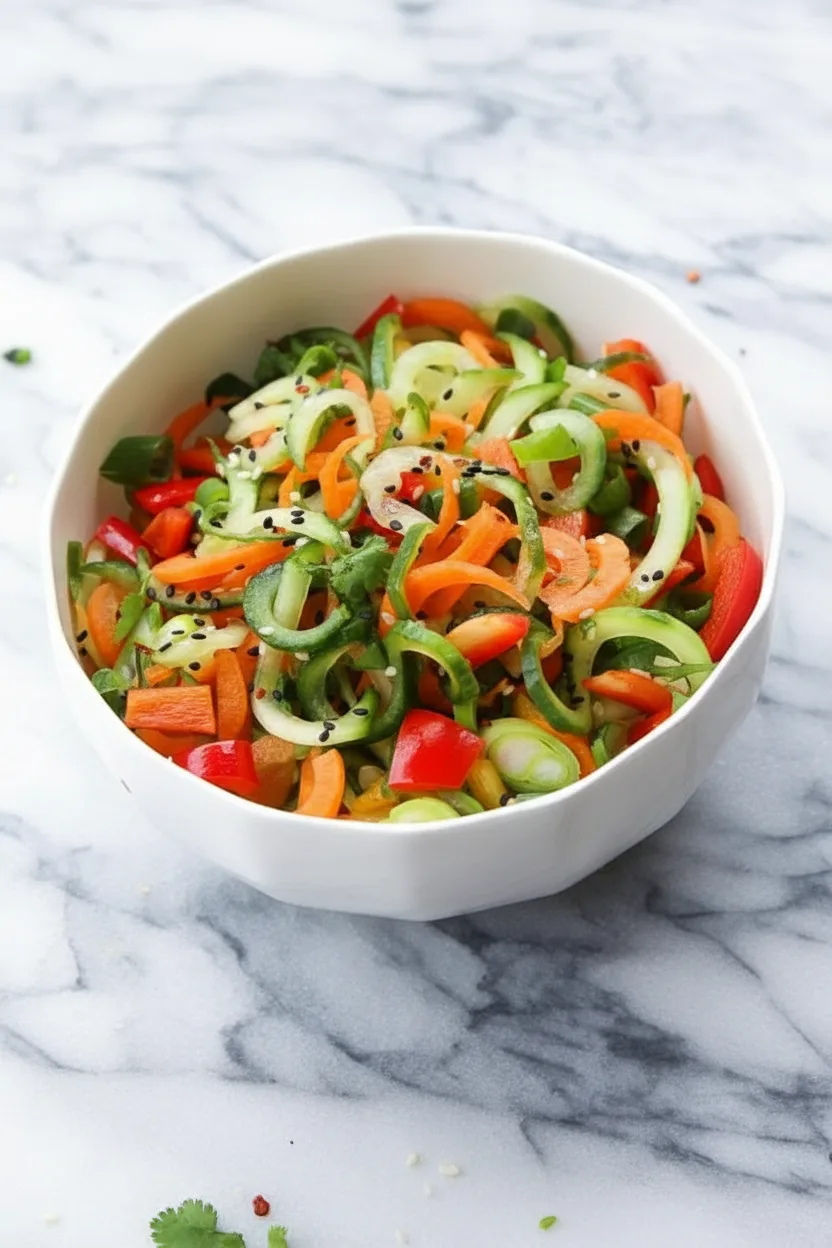
Bright, crunchy, and wonderfully refreshing, this Asian Cucumber Sesame Salad is a perfect side dish for any meal. It combines crisp cucumber noodles with sweet carrots and peppers, all tossed in a tangy, savory, and slightly sweet sesame dressing. Ready in just 25 minutes, this salad requires no cooking, making it an ideal choice for busy weeknights, potlucks, or as a light, healthy lunch.
The process of salting the cucumbers ensures they stay crisp and not watery, while the simple dressing packs a powerful flavor punch with ingredients like ginger, rice vinegar, and coconut aminos. It’s a versatile recipe that naturally fits gluten-free and paleo diets, and it’s packed with fresh, vibrant ingredients that are as good for you as they are delicious. Let’s dive into how you can bring this effortless, flavor-packed salad to your table tonight.
Why You’ll Love This Asian Cucumber Sesame Salad
You will adore this salad for its incredible texture and balanced flavors. First, it comes together in under 30 minutes with minimal effort. The salting technique for the cucumbers is a simple trick that makes a world of difference, preventing a soggy salad and ensuring every bite is perfectly crisp.
Furthermore, the dressing is a harmonious blend of tangy, sweet, and savory notes that clings beautifully to the vegetables. It’s also incredibly adaptable. You can easily adjust the spice level, swap in different veggies, or change the herbs to suit your taste. This salad is naturally gluten-free and can be made paleo-friendly, making it a fantastic option for various dietary needs.
It pairs wonderfully with grilled proteins, can be served alongside a comforting slow cooker dip for a party spread, or enjoyed all on its own for a light and satisfying meal.
Recipe
Print
Asian Cucumber Sesame Salad
- Total Time: 25 min
- Yield: 4 servings 1x
Description
A crisp and refreshing salad with cucumber noodles, carrots, and pepper in a tangy sesame ginger dressing.
Ingredients
- 2 large seedless cucumbers
- 2 large carrots
- 1 sweet pepper, chopped
- 1 teaspoon kosher salt
- 1 tablespoon sesame seeds, white or black
- 1 green onion sliced, use the green part only for low FODMAP
- 2 tablespoon cilantro, chopped
- 2 tablespoon rice vinegar
- 1 tablespoon freshly squeezed lime juice, about half a lime
- 1 tablespoon Coconut Aminos for paleo, or gluten free soy sauce/tamari
- 1 tablespoon maple syrup, can sub with honey or sugar
- 1 teaspoon grated ginger
- 1 tablespoon sesame oil
- pinch red pepper flakes, or to taste
- more salt to taste if needed
Instructions
- Trim the ends of the cucumber and spiralize the cucumbers or use a julienne peeler. Place the sliced cucumbers in a colander and toss them with the 1 teaspoon of salt. Let the cucumbers sit in the colander in the sink for at least 15 minutes to draw out excess water.
- While the cucumber is sitting, spiralize or peel the carrots and chop the sweet peppers. You can also use this time to prepare the dressing.
- Once the cucumber has drained for 15 minutes, spread them out on a layer of paper towels, or a clean dish towel, and gently pat out as much moisture as you can.
- Place the cucumber noodles, carrots, and pepper in mixing bowl large enough to hold the salad. Add 2-3 tablespoons of the dressing and toss to combine, coating the salad. Top with the sliced green onion, sesame seeds, and cilantro and serve immediately.
Notes
- Salting the cucumbers is essential for a crisp, non-watery salad.
- The dressing can be made ahead and stored separately for up to 5 days.
- For a spicier salad, increase the red pepper flakes or add a drizzle of chili crisp.
- Prep Time: 25 min
- Category: Main Course
- Method: Baked
- Cuisine: American
Nutrition
- Calories: 102 calories
- Sugar: 7 grams sugar
- Sodium: 692 milligrams sodium
- Fat: 4g
- Carbohydrates: 12 grams carbohydrates
- Fiber: 2 grams fiber
- Protein: 1 grams protein
Ingredients and Substitutions
This salad uses simple, fresh ingredients that create a complex and delightful flavor profile. Here’s what you’ll need and how you can swap things around if necessary.
Base Components
- Cucumbers: Two large seedless cucumbers form the salad’s foundation. English or Persian cucumbers work best as they have fewer seeds and thinner skin. You can also use regular cucumbers peeled and seeded.
- Carrots: One large carrot adds sweetness and a beautiful color contrast. You can use pre-shredded carrots to save time.
- Sweet Pepper: One chopped sweet pepper introduces a mild, crunchy element. Use any color you like-red, yellow, or orange for the brightest salad.
Sauce and Seasonings
- Rice Vinegar: This provides the essential tangy base for the dressing. Apple cider vinegar or white wine vinegar can be used in a pinch.
- Coconut Aminos: This is our savory, umami component, offering a great gluten-free and paleo alternative to soy sauce. You can use tamari for a gluten-free soy sauce option.
- Maple Syrup: A tablespoon adds a touch of natural sweetness to balance the acidity. Honey or a pinch of sugar are fine substitutes.
- Fresh Ginger: One teaspoon of grated ginger gives the dressing a warm, zesty kick. You can use 1/4 teaspoon of ground ginger if fresh isn’t available.
- Sesame Oil: Just one tablespoon delivers that deep, nutty, signature Asian flavor. Do not substitute this, as it’s key to the taste.
- Sesame Seeds: Use white or black sesame seeds for garnish and extra crunch.
- Fresh Herbs: Green onion (green part only) and fresh cilantro add a final layer of fresh flavor. Chopped parsley or a sprinkle of chives can work if you’re not a cilantro fan.
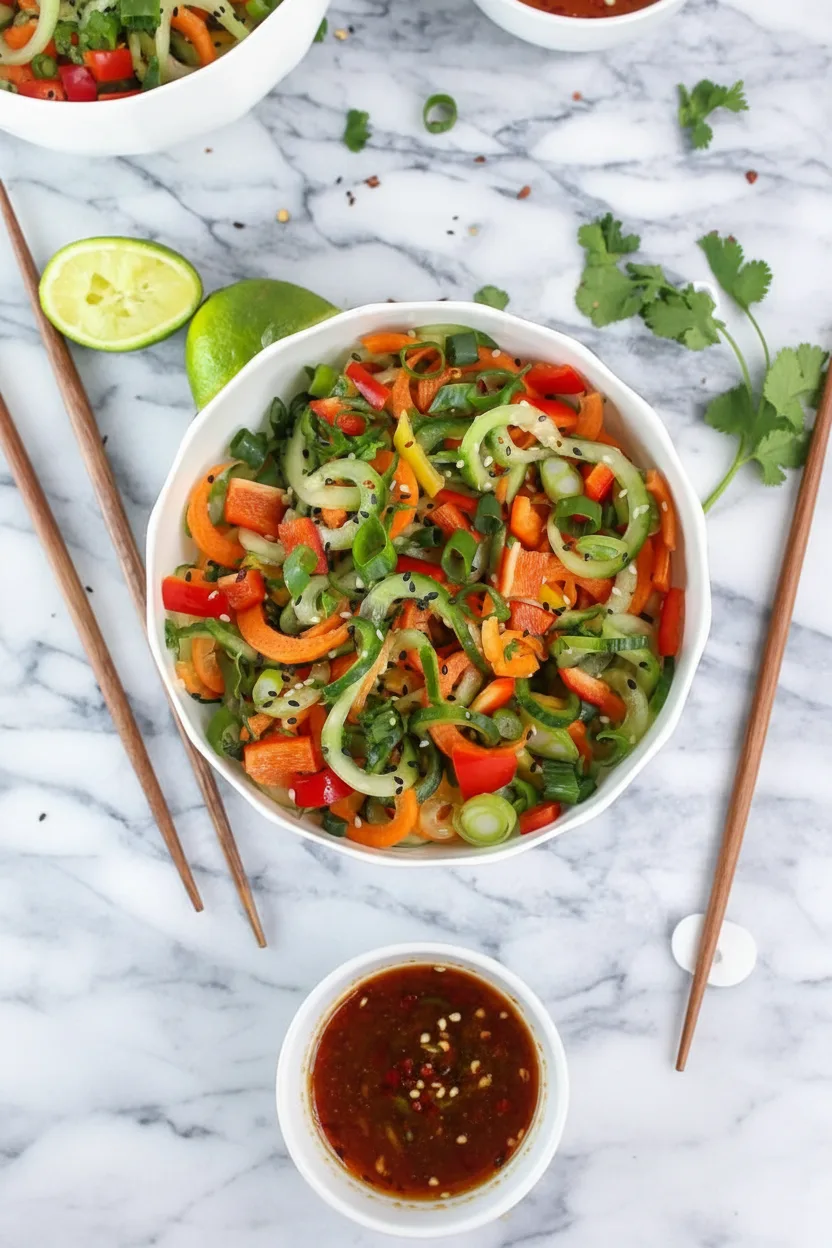
How to Make Asian Cucumber Sesame Salad
Making this salad is a straightforward process focused on preparing the vegetables and whisking together a simple dressing. Follow these easy steps for the best results.
Step 1: Prepare the Cucumbers
First, trim the ends off your cucumbers. Then, use a spiralizer, julienne peeler, or a simple vegetable peeler to create long, noodle-like strands. Place the cucumber noodles in a colander set in the sink. Toss them thoroughly with one teaspoon of kosher salt. This step is crucial. Let the cucumbers sit for at least 15 minutes. The salt will draw out excess moisture, ensuring your salad stays crisp and isn’t watered down by the dressing.
Step 2: Make the Dressing and Prep Other Veggies
While the cucumbers drain, prepare the remaining vegetables. Spiralize or peel the carrot into ribbons or matchsticks. Chop the sweet pepper. Then, make the dressing. In a small bowl, whisk together the rice vinegar, coconut aminos, maple syrup, grated ginger, sesame oil, and a pinch of red pepper flakes. Set this flavorful mixture aside.
Step 3: Dry the Cucumbers and Assemble
After 15 minutes, you’ll see water released from the cucumbers. Gently squeeze them or spread them on a clean kitchen towel or several layers of paper towels. Pat them dry to remove as much moisture as possible.
This guarantees a crunchy texture. Now, take a large mixing bowl. Add the dried cucumber noodles, prepared carrots, and chopped pepper. Pour about two to three tablespoons of the dressing over the top. Toss everything gently until the vegetables are evenly coated.
Finally, transfer the salad to a serving bowl or platter. Garnish generously with sliced green onions, a sprinkle of sesame seeds, and chopped cilantro. Serve immediately for the freshest taste and texture. This salad is a wonderful, light companion to richer dishes like creamy ricotta dip or baked appetizers.
Pro Tips for Success
For the absolute best Asian Cucumber Sesame Salad, keep these expert tips in mind. Always use the salting technique. Do not skip salting and draining the cucumbers. It is the single most important step for achieving a non-watery, restaurant-quality salad. Additionally, taste your dressing before adding it.
Adjust the sweet, tangy, or savory balance to your liking by adding a touch more maple syrup, vinegar, or coconut aminos. Furthermore, use a spiralizer for the best texture. It creates fun, noodle-like strands that hold the dressing well. If you don’t have one, a vegetable peeler works great for creating wide, flat ribbons.
Finally, garnish just before serving. Adding the fresh herbs and sesame seeds right before eating keeps them vibrant and crunchy. For a complete meal, consider serving it alongside something hearty like spinach artichoke wonton cups.
Flavor Variations
This recipe is a fantastic canvas for creativity. Feel free to experiment with different flavors and textures. For a protein-packed meal, add shredded chicken, cooked shrimp, or cubed tofu. You can also add thin slices of red onion or radish for extra bite and color. For a different nutty flavor, try topping the salad with chopped peanuts or cashews instead of sesame seeds.
If you love spice, increase the red pepper flakes or add a drizzle of chili crisp or sriracha to the dressing. For an herbal twist, try adding fresh mint or Thai basil along with the cilantro. You can even swap the base vegetable; try making zucchini noodles or adding shredded cabbage for a different crunch.
Serving Suggestions
This versatile salad shines in many settings. It’s a perfect light lunch on its own. It also makes an excellent side dish for grilled chicken, salmon, or steak. Pack it for a picnic or potluck, as it travels well and stays crisp. Serve it as a refreshing starter before a rich main course. You can also pile it into lettuce cups for a low-carb meal option. For a festive spread, serve it with a variety of other Asian-inspired dishes like spring rolls or dumplings.
Storage and Freezing Instructions
This salad is best enjoyed fresh the day it’s made. The cucumbers will continue to release water, so it doesn’t store for long periods. However, if you have leftovers, you can store them in an airtight container in the refrigerator for up to 24 hours. The texture will become softer but will still taste good.
It is not recommended to freeze this salad. The high water content in the vegetables will cause them to become mushy and unpalatable upon thawing. The dressing can be made ahead and stored separately in the fridge for up to 5 days. Simply dress the freshly prepared vegetables when you’re ready to serve.
Nutrition Facts per Serving
| Calories | Fat | Carbs | Protein | Fiber | Sugar | Sodium |
|---|---|---|---|---|---|---|
| 102 calories | 4g | 12g | 1g | 2g | 7g | 692mg |
FAQs About Asian Cucumber Sesame Salad
Here are answers to some common questions about making this delightful salad.
Can I make this salad ahead of time?
You can prepare the components ahead. Spiralize the cucumbers and carrots, chop the pepper, and make the dressing. Store them separately in the refrigerator. Salt and dry the cucumber noodles no more than an hour before serving, then toss everything together. This keeps the vegetables crisp.
What can I use if I don’t have a spiralizer?
No spiralizer is needed. You can use a standard vegetable peeler to create long, flat ribbons. Alternatively, you can use a mandoline slicer or simply chop the cucumbers into thin half-moons or small cubes for a different, but still delicious, texture.
Is this salad gluten-free and paleo?
Yes, as written with coconut aminos, this recipe is both gluten-free and paleo-friendly. If you use tamari, ensure it’s a certified gluten-free brand. Always check labels on ingredients like rice vinegar to confirm they meet your dietary needs.
How can I reduce the sodium in this recipe?
The primary source of sodium is the salt used on the cucumbers and the coconut aminos. You can reduce the kosher salt by half when prepping the cucumbers. Also, look for a low-sodium coconut aminos or use less of it in the dressing, balancing the flavor with a little extra lime juice or rice vinegar.
My salad became watery after storing. Can I fix it?
If your leftover salad has pooled water at the bottom, simply drain it off. You can also gently pat the salad with a paper towel to absorb excess moisture. The flavor will still be good, though the texture will be softer than when freshly made.
Final Thoughts
This Asian Cucumber Sesame Salad is a celebration of simplicity and fresh flavors. It proves that with a few quality ingredients and a simple technique, you can create a side dish that is both impressive and incredibly easy. The combination of cool, crisp vegetables with the aromatic, tangy-sweet dressing is truly irresistible.
It’s a healthy, vibrant recipe that complements almost any meal and is sure to become a regular in your recipe rotation. Give it a try for your next dinner, and enjoy the burst of fresh, Asian-inspired flavor in every crunchy bite.