If you’re craving the bold, spicy-sweet flavors of Korean cuisine but want to keep your meal plant-based, you’ve come to the right place. This Crispy Korean Gochujang Tofu recipe is a game-changer. It delivers a perfect harmony of textures and tastes, featuring crispy baked tofu cubes smothered in a rich, complex sauce that’s umami-forward with just the right kick. Tofu is an incredibly versatile canvas, and when paired with the fermented depth of gochujang, it transforms into a dish that’s deeply satisfying and surprisingly easy to make at home.
This guide will walk you through every step to achieve that coveted crispy exterior and tender interior, all while crafting a sauce that clings beautifully to every bite. Let’s unlock the secrets to making restaurant-quality Korean-inspired tofu in your own kitchen.
The Art of the Perfectly Crispy Tofu
Many home cooks struggle with soggy, bland tofu. The key to success lies in proper preparation. Starting with extra-firm tofu is non-negotiable for this recipe, as it holds its shape and releases the most water. The secret two-step process here involves pressing and then coating. Pressing, either with a tofu press or the simple towel method described, removes excess moisture, which is the enemy of crispiness.
This allows the cornstarch to adhere properly and form a thin, crackly layer during baking. The gluten-free breadcrumbs add an extra layer of texture and help the sauce stick later. Baking the tofu on a parchment-lined sheet, ensuring the pieces don’t touch, guarantees hot air circulates evenly, leading to all-over golden-brown perfection without the need for deep-frying.
What is Gochujang?
Gochujang is the star of this dish and a cornerstone of Korean cooking. It’s a fermented red chili paste made from glutinous rice, fermented soybeans (meju powder), salt, and sometimes a sweetener like barley malt syrup. This fermentation process gives gochujang its unique savory, sweet, spicy, and umami-packed flavor profile.
It’s more complex and less vinegary than many Western hot sauces. When shopping, be sure to check the label if you need a gluten-free version, as some brands use wheat. In our sauce, it’s balanced beautifully with the acidity of rice vinegar, the sweetness of pure maple syrup, and the savory notes of tamari.
Step-by-Step Recipe Guide
Follow these detailed instructions for foolproof results. The process is broken down into two main components: preparing the crispy tofu and making the signature gochujang sauce. The beauty of this recipe is that you can prepare the sauce while the tofu bakes, making efficient use of your time.
Preparing and Baking the Tofu
Begin by preheating your oven to 400°F (204°C). Drain your block of extra-firm tofu and wrap it in a clean kitchen towel or paper towels. Gently press to remove as much liquid as possible; you can place a light weight (like a skillet) on top for 10 minutes for even better results. Cut the pressed tofu into roughly 1-inch cubes. In a medium bowl, toss the cubes first with low-sodium tamari or soy sauce, ensuring each piece is lightly coated. This adds the first layer of flavor. Next, sprinkle the cornstarch over the tofu and toss again until a thin, dry coating forms.
Finally, add the gluten-free breadcrumbs and toss to coat evenly. Arrange the coated cubes in a single layer on a parchment-lined baking sheet, making sure they aren’t touching. Bake for 25 minutes. For extra crispiness, you can turn off the oven and let the tofu sit inside for an additional 5 minutes as the oven cools down. Remove and let cool on the sheet for 5 minutes; this helps the exterior set.
Crafting the Gochujang Sauce
While the tofu bakes, prepare the sauce. In a small saucepan, combine 1/4 cup of low-sodium tamari (or soy sauce), 1/4 cup gochujang, 1 tablespoon tomato paste, 2 tablespoons vegetable broth, 3 tablespoons of pure maple syrup, 1 tablespoon toasted sesame oil, 1 tablespoon rice vinegar, 2 teaspoons of minced garlic, and 1 teaspoon of freshly grated ginger. Whisk these ingredients together over low heat until smooth and warm. In a separate small bowl, create a slurry by mixing 1 teaspoon of cornstarch with 1 teaspoon of cold water until completely smooth.
Slowly whisk this slurry into the warming sauce. Continue to cook over low-medium heat, whisking constantly, until the sauce begins to bubble and thicken noticeably, which should take just 2-3 minutes. Remove from heat immediately; the residual heat will continue to thicken it to a perfect, glaze-like consistency.
Assembly and Serving Suggestions
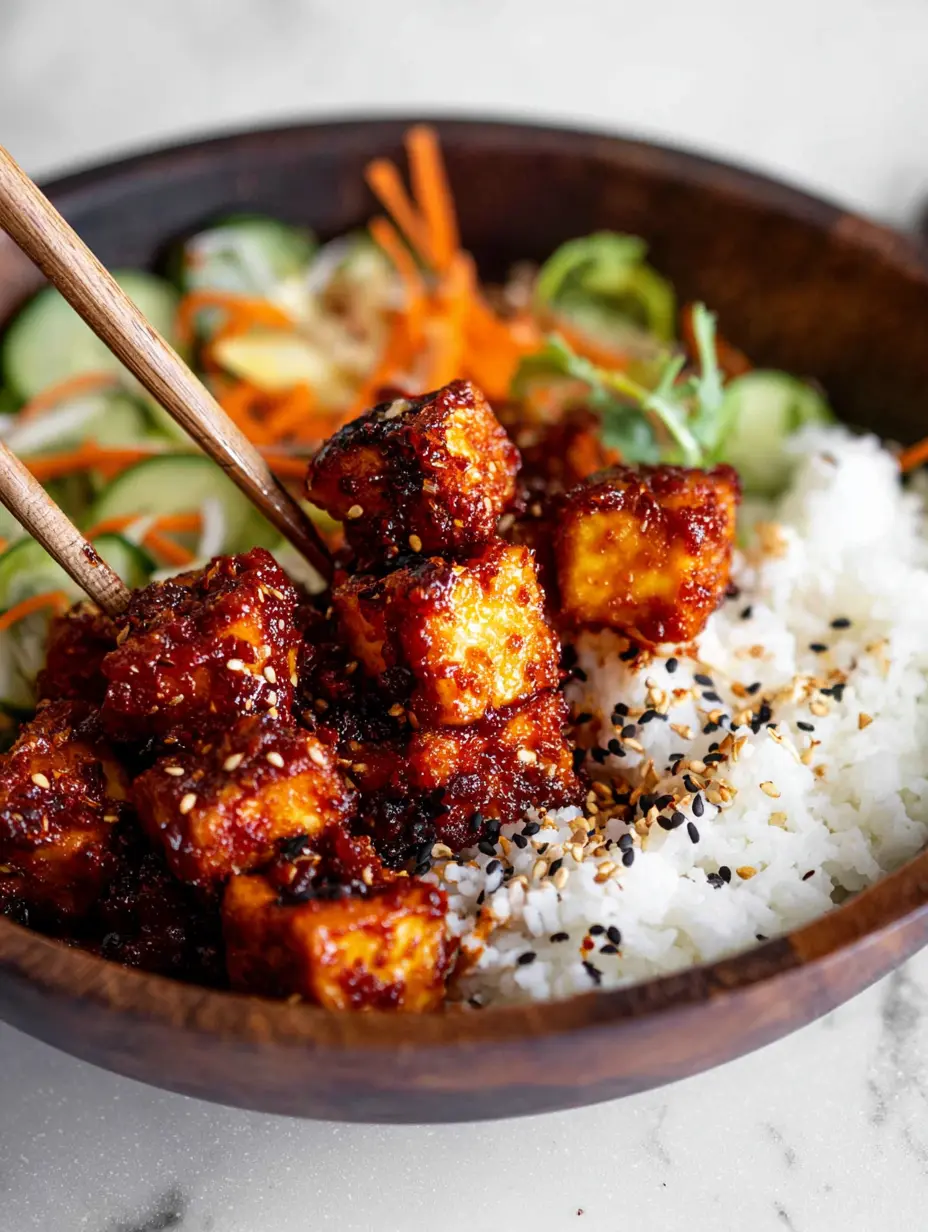
Once the tofu has cooled slightly, transfer it to a large mixing bowl. Pour about half of the warm gochujang sauce over the tofu and toss gently but thoroughly until every cube is generously coated. Reserve the remaining sauce for serving at the table. This crispy Korean gochujang tofu is incredibly versatile. For a classic bowl, serve it over a bed of steamed white or brown rice. Add freshness with quick-pickled cucumbers, shredded carrots, sliced avocado, and a sprinkle of sesame seeds and chopped green onions.
It also pairs wonderfully with steamed broccoli, bok choy, or sautéed spinach for a more veggie-focused plate. The dish holds well, making it excellent for meal prep—just store the tofu and sauce separately and combine when ready to eat to maintain maximum crispiness.
Nutritional Insights and Benefits
This dish isn’t just delicious; it’s also nutritionally balanced. Tofu is a complete plant-based protein, providing all nine essential amino acids. It’s also a good source of iron, calcium, and minerals like manganese. The recipe uses baking instead of frying, significantly reducing added fat content.
The sauce gets its sweetness from natural maple syrup, avoiding refined sugars. Here is a detailed nutritional breakdown per serving:
| Nutrient | Amount per Serving |
|---|---|
| Calories | 192 kcal |
| Total Fat | 4 g |
| Carbohydrates | 30 g |
| Dietary Fiber | 1 g |
| Sugars | 11 g |
| Protein | 8 g |
Chef’s Notes and Pro Tips
For the crispiest results, ensure your tofu is as dry as possible before coating. Pressing is crucial. Don’t skip the step of letting the tofu cool for 5 minutes after baking; this allows the crust to firm up. If you prefer a spicier sauce, add a teaspoon of gochugaru (Korean red pepper flakes) to the sauce mixture. For a nuttier flavor, you can toast the breadcrumbs in a dry pan before using them to coat the tofu.
This dish is naturally vegan and can be made gluten-free by using certified gluten-free tamari and gochujang. Leftovers can be stored in an airtight container in the refrigerator for up to 3 days. Reheat in an air fryer or toaster oven to restore crispiness, as microwaving will make the tofu soft.
This Crispy Korean Gochujang Tofu recipe proves that plant-based eating can be explosively flavorful and deeply satisfying. It brings the vibrant, comforting tastes of Korean cuisine to your table in a healthy, accessible way. By mastering the simple techniques of pressing, coating, and baking tofu, and by learning to balance the flavors in the iconic gochujang sauce, you add a powerful staple to your weekly meal rotation.
It’s a crowd-pleaser that will delight vegans, vegetarians, and meat-eaters alike. Give it a try and discover your new favorite way to enjoy tofu!
The Recipe
Print
Crispy Gochujang Korean Tofu
- Total Time: 45 min
- Yield: 4 servings 1x
- Diet: Vegan, Vegetarian, can be Gluten-Free
Description
Crispy baked tofu cubes coated in a sweet, spicy, and savory Korean gochujang sauce. A quick, healthy, and flavor-packed vegan meal.
Ingredients
1 16 ounce block extra firm tofu
1 tablespoon tamari or soy sauce
1 tablespoon cornstarch
3 tablespoons gluten free breadcrumbs (can sub regular breadcrumbs)
1/4 cup low sodium tamari or soy sauce
1/4 cup gochujang/red chili paste (check for GF if needed)
1 tablespoon tomato paste
2 tablespoons vegetable broth or water
3 tablespoons pure maple syrup
1 tablespoon toasted sesame oil
1 tablespoon rice vinegar
2 teaspoons minced garlic
1 teaspoon fresh grated ginger
1 teaspoon cornstarch
1 teaspoon water
Instructions
- Preheat oven to 400°F (204°C). Drain and press tofu, then cut into 1-inch cubes.
- In a bowl, toss tofu cubes first with 1 tbsp tamari, then with 1 tbsp cornstarch, then with breadcrumbs until coated.
- Place tofu on a parchment-lined baking sheet in a single layer, not touching. Bake for 25 minutes.
- Turn off oven and let tofu sit inside for 5 more minutes. Remove and cool for 5 minutes.
- Meanwhile, for the sauce: whisk all sauce ingredients except the cornstarch/water slurry in a small pot.
- Whisk 1 tsp cornstarch with 1 tsp water. Add slurry to the pot and heat over low-medium, whisking, until bubbling and thickened. Remove from heat.
- Toss the baked tofu with half the sauce in a bowl. Serve with rice and veggies, with extra sauce on the side.
Notes
- For crispier tofu, press it well. A tofu press or weighted towel for 10 minutes works great.
- Ensure tofu pieces don’t touch on the baking sheet for optimal air circulation and crispiness.
- Sauce will thicken more as it cools. Use reserved sauce for dipping or drizzling.
- To make gluten-free, use certified GF tamari and gochujang.
- Prep Time: 15 min
- Cook Time: 30 min
- Category: Main Course
- Method: Baked
- Cuisine: Korean-Inspired
Nutrition
- Serving Size: 1 bowl (approx. 1/4 of recipe)
- Calories: 192 kcal
- Sugar: 11 g
- Fat: 4 g
- Carbohydrates: 30 g
- Fiber: 1 g
- Protein: 8 g