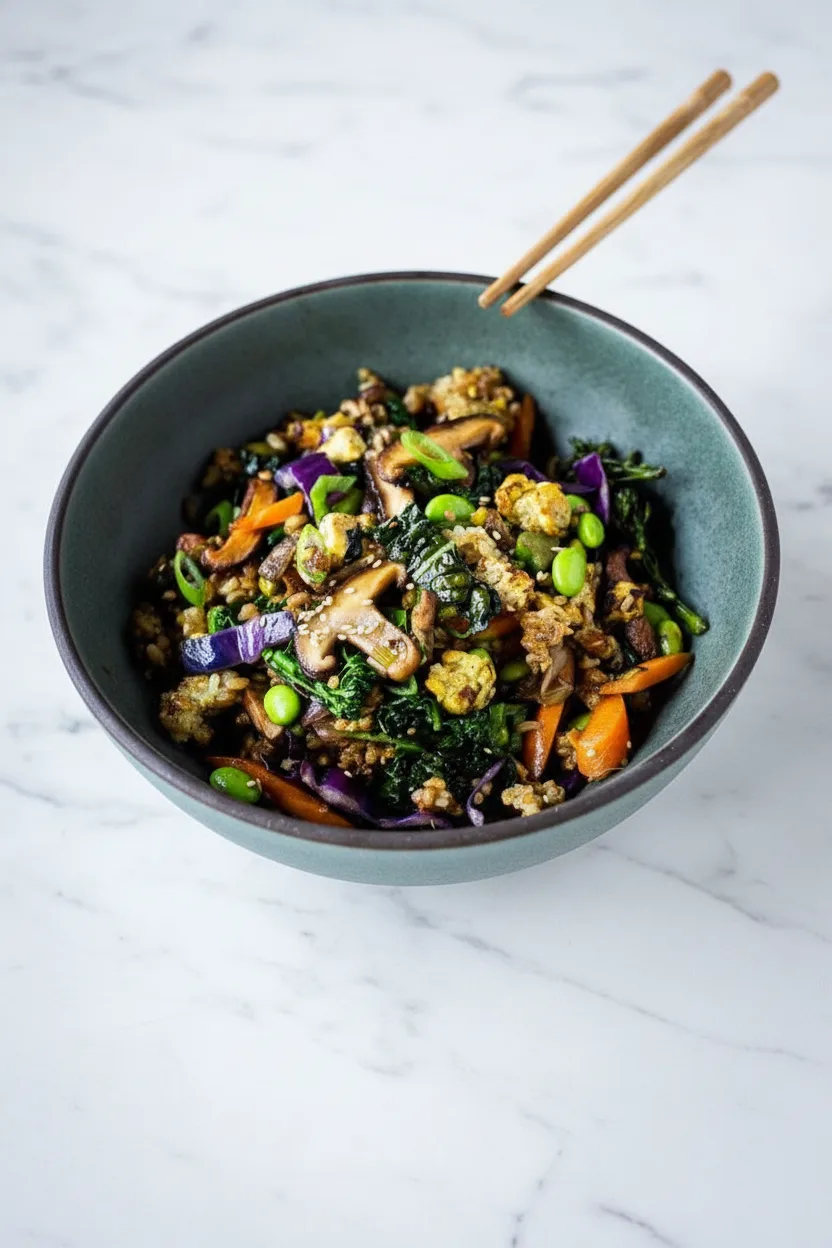
This veggie-loaded fried rice transforms your leftover grains into a vibrant meal bursting with color and flavor. Packed with fresh vegetables and plant-based protein, this dish delivers satisfying crunch in every bite. Whether you use tofu or eggs as your protein base, the crispy rice and savory seasonings create a crowd-pleasing dinner ready in 40 minutes.
Why You’ll Love This Veggie-Loaded Fried Rice
Several great reasons make this fried rice recipe stand out. First, its flexible ingredients let you use whatever veggies linger in your fridge. Second, cold leftover rice gains new life with crispy pan-fried texture. Third, nourishing plant proteins keep this dish light yet filling. Most importantly, even novice cooks achieve restaurant-quality results with these simple steps.
Health Benefits Galore
This meal overflows with vegetable goodness thanks to vitamin-rich carrots, iron-packed greens, and fiber-filled edamame. Tofu adds calcium while sesame oil provides healthy fats. Compared to takeout versions, this homemade option cuts excess sodium and oil without sacrificing flavor.
Customizable Family Favorite
Kids and adults alike enjoy customizing their bowls with preferred veggies and spice levels. Leftovers taste equally delicious reheated for lunch the next day. Busy households appreciate how this meal simplifies dinner planning while using up leftover rice creatively.
Recipe
Print
Veggie-Loaded Fried Rice
- Total Time: 40 min
- Yield: 4 servings 1x
Description
Packed with colorful vegetables and plant-based protein, this crispy fried rice makes a satisfying meal ready in 40 minutes.
Ingredients
- 8 ounces tofu (or two eggs, whisked) (226 g)
- 4–5 tablespoons coconut oil (or peanut oil, olive oil, or use butter or ghee) divided (60–75 ml)
- 2 leeks (chopped and rinsed) or 1 onion, diced
- 3 garlic cloves, rough chopped
- 4 cups chopped veggies: carrots, mushrooms, cabbage, bok choy, asparagus, kale, bell pepper, broccoli, broccolini, zucchini, snow peas, green beans, baby spinach, kale (600 g)
- 1 cup shelled edamame or peas (frozen) (150 g)
- 3 cups cooked, cold, dry rice (or brown rice) (750 g)
- 3 tablespoons soy sauce or GF Liquid aminos (45 ml)
- 1 teaspoon toasted sesame oil (5 ml)
- salt and pepper to taste- or 1/4 teaspoon each
- 1/4 cup scallions (15 g)
- 1–2 teaspoons Furikake or toasted sesame seeds (2–4 g)
- optional: sriracha sauce
Instructions
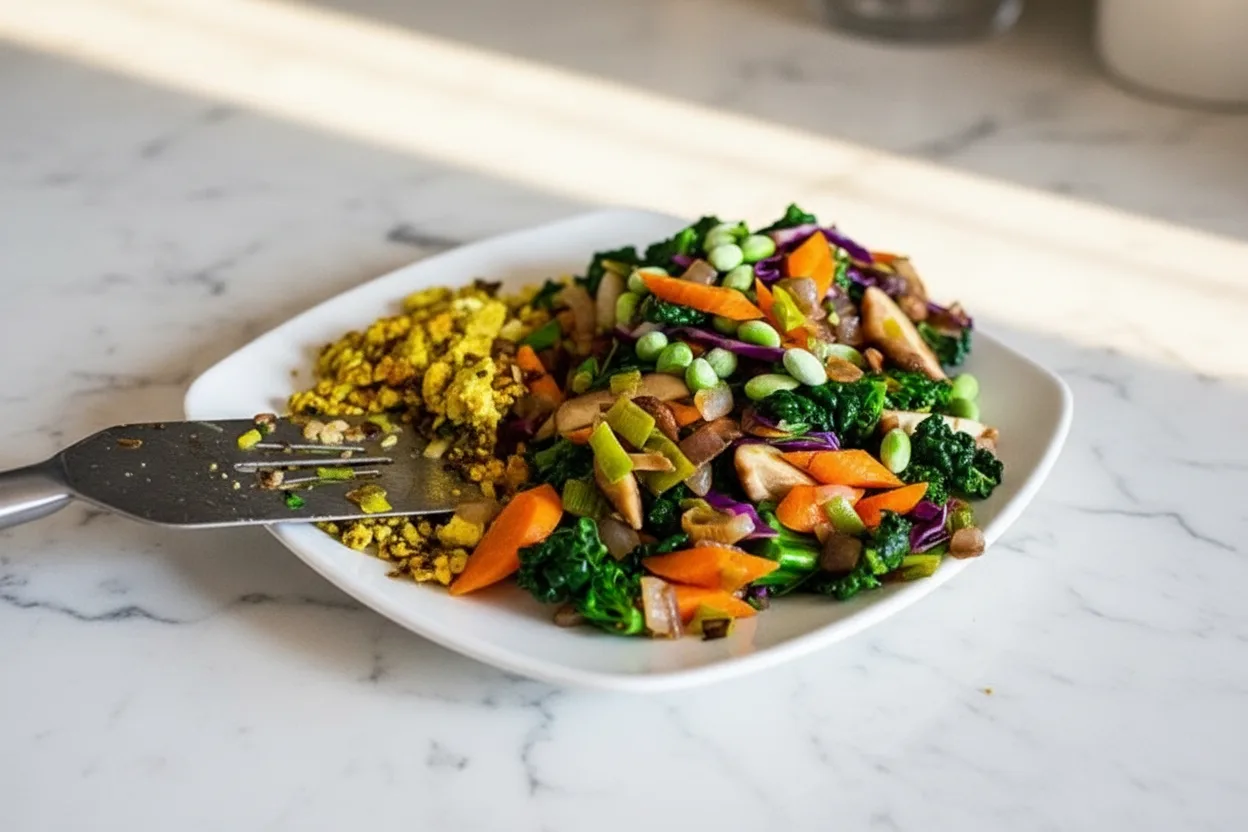
- In an extra-large non-stick skillet, heat 2 tablespoons oil over medium heat and scramble the eggs or tofu. If using tofu, blot it dry first, and break it apart into little bits with the spatula in the pan. Season with a little salt and pepper. Set aside on a large plate.
- In the same pan, heat oil over medium, and saute the leeks or onion. Once tender add the garlic, saute 1-2 minutes.
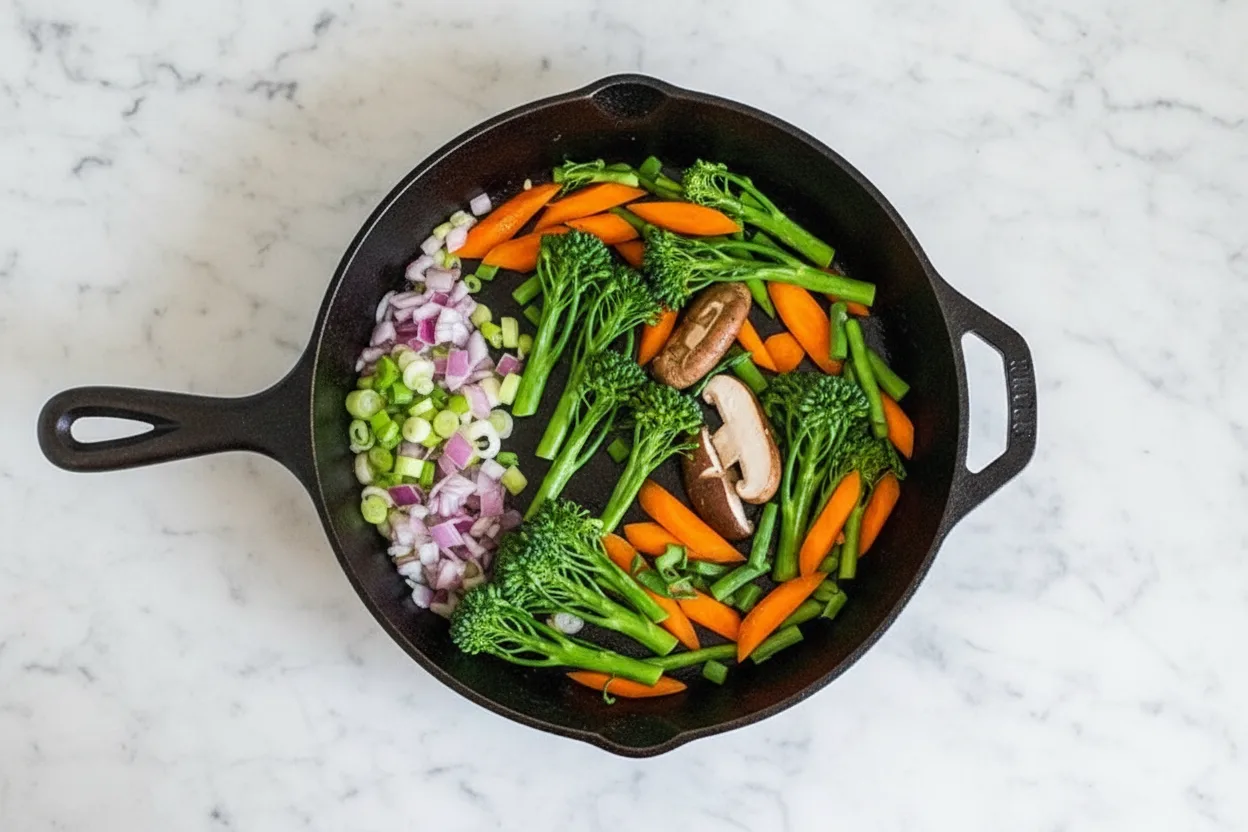
- Lower heat to medium and add longer cooking veggies first like carrots and mushrooms, then add the other veggies, leaving the greens, kale or cabbage to add at the end. Toss in the frozen edamame and give a stir, and set the veggies aside next to the tofu (or scrambled eggs).
- Add enough oil to lightly coat the pan. Add the rice, spreading it out. Turn up heat to med-high, and let it get a little crispy, resisting the urge to constantly stir. Flip the rice big sections using a spatula and crisp up the other side.
- Once the rice is crispy enough to your liking, add back in the tofu (or eggs) and the veggies. Give a good stir to combine. Add the soy sauce, sesame oil and salt and pepper to taste.
- Taste the rice. If it needs more flavor, add more soy sauce, salt and/or sesame oil to taste.
- Divide among bowls and top with fresh scallions and Furikake or toasted sesame seeds, serve with sriracha for a kick of heat.
Notes
- Use cold leftover rice for best texture.
- If using fresh rice, spread it on a tray and refrigerate uncovered before cooking.
- Garnish squeeze lime juice for extra brightness.
- Prep Time: 20 min
- Cook Time: 20 min
- Category: Main Course
- Method: Baked
- Cuisine: American
Nutrition
- Calories: 453 calories
- Sugar: 5.3 g
- Sodium: 372.9 mg
- Fat: 21.9 g
- Carbohydrates: 52.5 g
- Fiber: 8.1 g
- Protein: 16.9 g
Ingredients and Substitutions
This recipe shines because you can adapt it based on available ingredients and dietary needs. Let’s explore the key components and possible swaps.
Protein Power Choices
Use either tofu or eggs as your primary protein source. Tofu creates a vegan option when prepared without animal products. For omnivores, eggs offer familiar comfort. Whichever you choose, season it well with salt, pepper, and optional turmeric for color.
Vegetable Variety
Carrots, mushrooms, bok choy, asparagus, bell peppers, broccoli, zucchini, snow peas, and spinach work beautifully here. Prioritize veggies needing longer cooking times first—like carrots and mushrooms—before adding quicker-cooking greens. Frozen edamame or peas add effortless pops of sweetness without prep work.
Seasoning Essentials
Soy sauce or liquid aminos build umami depth while toasted sesame oil adds nutty fragrance. Furikake seasoning or sesame seeds provide finishing flair. Sriracha serves those craving heat. Coconut oil lends subtle sweetness, though other oils work depending on preference.
How to Make Veggie-Loaded Fried Rice
Follow these straightforward steps for perfect fried rice every time. Remember to prep all ingredients before starting since cooking moves quickly once the pan heats up.
Preparing Your Components
First, chop vegetables into uniform pieces for even cooking. Separate quick-cooking greens from heartier veggies. Measure sauces and seasonings within easy reach. Break apart cold rice clumps to prevent mushiness later. Pat tofu dry thoroughly if using it.
Cooking Protein First
Heat two tablespoons oil in a large nonstick skillet over medium heat. Scramble eggs or crumble tofu until lightly browned. Remove from pan and set aside. Wipe the pan if needed before continuing.
Sautéing Vegetables
Add more oil to the skillet and sauté leeks or onions until tender. Next, add garlic for aromatic depth. Introduce longer-cooking veggies like carrots and mushrooms, followed by medium-cooking options. Finally, stir in greens just until wilted. Add frozen edamame last before removing veggies.
Crisping the Rice
Pour enough oil to coat the pan’s surface, increase heat to medium-high, and spread rice evenly. Let it sit untouched for two minutes to develop crispy bits. Flip sections using a spatula and repeat until desired crispness. Resist stirring constantly.
Combining Everything
Return cooked protein and veggies to the skillet. Drizzle soy sauce and sesame oil over everything. Toss gently to combine without breaking rice grains. Taste and adjust seasonings with extra soy sauce, salt or pepper as needed.
Pro Tips for Success
Expert techniques help you avoid common fried rice pitfalls while maximizing flavor and texture. Implement these suggestions for foolproof results.
Rice Selection Matters
Use cold, day-old rice for best texture since fresh rice contains excess moisture. Short-grain white or brown rice both work well. Spread fresh-cooked rice on a baking sheet and chill uncovered for an hour before using if no leftovers exist.
High Heat Handling
Avoid overcrowding the pan by cooking in batches if necessary. High heat creates desirable caramelization without steaming ingredients. Keep components moving occasionally once crisping begins to prevent burning while encouraging even browning.
Balancing Seasonings
Add soy sauce gradually since different brands vary in saltiness. Taste after each addition and remember leftover garnishes like Furikake contain sodium too. For gluten-free needs, certified tamari or coconut aminos substitute seamlessly.
Flavor Variations
This recipe adapts beautifully to different cuisines and flavor profiles. Consider these tasty twists for inspired variations.
Asian-Inspired Tweaks
Add minced ginger with the garlic for extra zing. Swirl in hoisin sauce or oyster sauce substitute for sweetness. Top with cilantro and lime wedges for Thai vibes. Add pineapple chunks and cashews for tropical flair.
Protein Swaps
Crumbled tempeh makes another satisfying plant-based option. For seafood lovers, try adding shrimp or chopped crabstick. Instead of scattering proteins throughout, bake some savory Crab Rangoon as a crispy side.
Heat Adjustments
Include red pepper flakes during cooking for consistent spice. Drizzle with chili crisp for crunchy heat. Offer kimchi on the side for tangy fermentation notes. Those preferring milder flavors can omit chilies entirely.
Serving Suggestions
This veggie-loaded fried rice satisfies as a standalone meal but pairs wonderfully with complementary sides. Here are delicious serving ideas.
Perfect Pairings
Add miso soup or egg drop soup for comforting Asian-inspired dining. Fresh spring rolls or dumplings make tasty appetizers. A simple cucumber salad balances the meal’s richness with refreshing crunch.
Fusion Flavors
Serve alongside zesty taco roll-ups for fun fusion meals. Top with avocado slices and black beans for Mexican-Asian crossover appeal. Pair with baked sweet potatoes for hearty vegetarian dinners.
Garnish Galore
Scatter extra scallions, sesame seeds, or nori strips over individual portions. Add quick-pickled vegetables for acidity. Place lime wedges and sriracha bottles on the table for personalized seasoning.
Storage and Freezing Instructions
Proper storage keeps leftovers tasting fresh while freezing extends enjoyment of this versatile dish. Follow these guidelines for best results.
Refrigerating Leftovers
Cool fried rice completely before transferring to airtight containers. Store in the refrigerator up to four days. Reheat portions in a skillet over medium heat with a splash of water to restore moisture.
Freezer-Friendly Steps
Portion cooled rice into freezer-safe bags or containers. Exclude air carefully to prevent freezer burn. Label with dates and freeze up to two months. Thaw overnight in the refrigerator before reheating thoroughly.
Creative Reuses
Transform leftovers into stuffed peppers or omelet fillings. Mix fried rice with broth for quick soup. Use it inside lettuce wraps or cabbage rolls for handheld meals.
Nutrition Facts per Serving
| Calories | Fat | Carbs | Protein | Fiber | Sugar | Sodium |
|---|---|---|---|---|---|---|
| 453 calories | 21.9 g | 52.5 g | 16.9 g | 8.1 g | 5.3 g | 372.9 mg |
FAQs About Veggie-Loaded Fried Rice
Can I Use Freshly Cooked Rice?
Cold, pre-cooked rice works best, but you can use fresh rice in a pinch. Spread it thin on a baking sheet and chill uncovered at least an hour. This removes enough moisture to prevent mushiness during frying.
How Do I Prevent Soggy Fried Rice?
Avoid overcrowding the pan and resist stirring constantly. Crispiness develops when rice contacts hot surfaces undisturbed. Prep vegetables dry since excess liquid creates steam. Also, use sufficient oil so ingredients don’t stick.
What Oil Works Best?
Coconut oil offers nice flavor but other neutral oils like peanut, canola or avocado work great too. Avoid olive oil for high-heat cooking since it smokes easily. Sesame oil drizzled later adds flavor without burning.
Can I Make This Gluten-Free?
Yes, substitute soy sauce with tamari or coconut aminos. Double-check brands for gluten certification if needed. Use gluten-free Furikake or simply top with sesame seeds.
What If I Want Extra Protein?
Double the amount of tofu or eggs in the recipe. Alternatively, try baking Buffalo Tofu Wings alongside your fried rice for additional plant-based protein. Edamame also boosts protein content garden-fresh.
Final Thoughts
This veggie-loaded fried rice combines speedy preparation with customizable nutrition—ideal for hectic weeknights yet impressive enough for entertaining. Vegetables retain vibrant textures while crisp rice adds satisfying crunch. Balanced seasonings highlight fresh ingredients without overwhelming them.
Whether enjoying leftovers or serving family-style, each forkful bursts with wholesome goodness. This recipe proves healthy eating doesn’t require complicated steps or hard-to-find ingredients. Keep this formula handy whenever your vegetable drawer needs clearing or rice leftovers accumulate.