There’s something magical about a pot of minestrone bubbling on the stove. It smells like comfort, tastes like a cozy hug, and makes everyone around the table feel right at home.
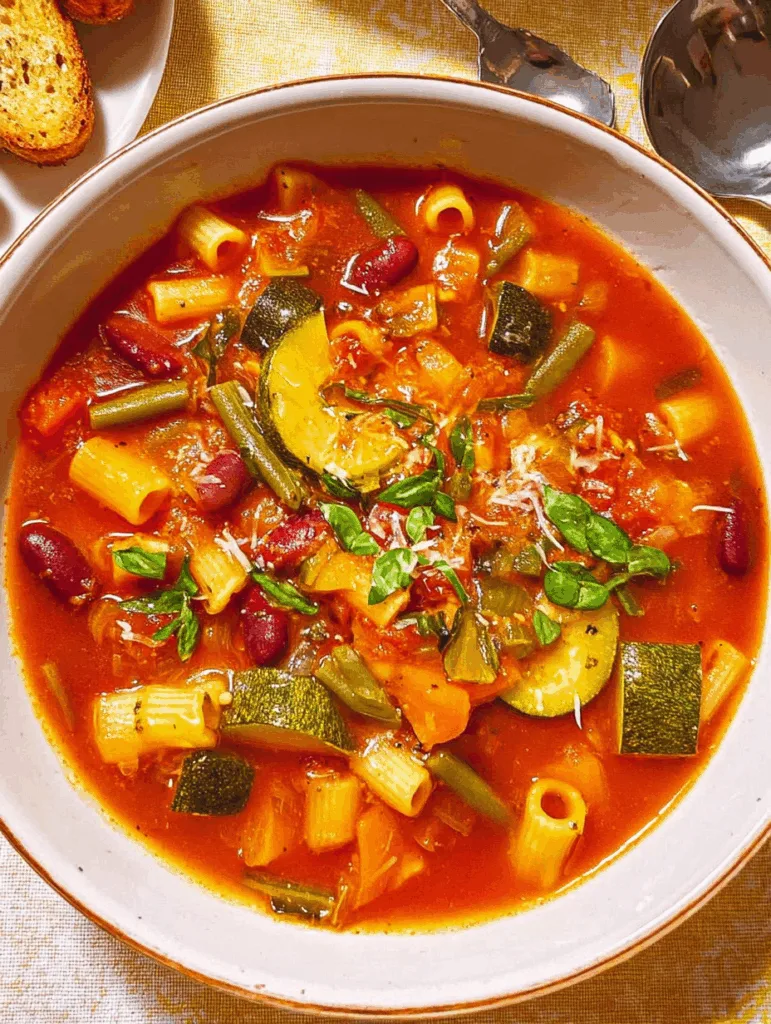
This Italian-inspired classic is brimming with vegetables, beans, and pasta, simmered in a flavorful tomato broth that’s hearty yet fresh. Whether it’s a chilly night or you’re just craving something nourishing, this bowl has you covered.
The Comfort of Homemade Minestrone
There’s no denying it, minestrone is one of those dishes that never fails to impress without trying too hard. It’s rustic, flexible, and perfectly balanced between light and hearty. The beauty of this soup lies in its adaptability: you can toss in whatever veggies you have on hand and still end up with something spectacular.
Here’s what makes this recipe shine:
- A rich tomato base that develops depth as it simmers.
- Layers of vegetables, each adding their own character.
- A subtle mix of herbs that make your kitchen smell like an Italian trattoria.
- Just enough pasta to make every spoonful satisfying but not heavy.
And yes, it’s completely meat-free and comforting in every sense. It pairs beautifully with a slice of crusty bread or, if you’re feeling extra cozy, serve it alongside something creamy like this Creamy Corn Chowder.
Recipe
Print
Classic Minestrone Soup
- Total Time: 50 minutes
- Yield: 6 servings 1x
- Diet: Vegetarian
Description
Classic Minestrone Soup – a hearty Italian soup packed with seasonal vegetables, beans, and pasta simmered in a flavorful tomato broth. Comforting, nourishing, and perfect for make-ahead meals.
Ingredients
- 1 cup ditalini or elbow pasta (200 g)
- 1/4 cup extra virgin olive oil (60 ml)
- 1 small yellow onion, chopped (100 g)
- 2 carrots, chopped (120 g)
- 2 celery stalks, diced (100 g)
- 4 garlic cloves, minced (12 g)
- 1 zucchini or yellow squash, diced (180 g)
- 1 cup green beans, trimmed and cut into 1-inch pieces (150 g)
- 1 teaspoon paprika (2 g)
- 1/2 teaspoon dried rosemary (1 g)
- 1 (15-ounce) can crushed tomatoes (425 g)
- 6 cups vegetable broth (1.4 L)
- 1 dried bay leaf
- 2 to 3 sprigs fresh thyme
- 1 (15-ounce) can kidney beans, drained and rinsed (425 g)
- 1 handful parsley, chopped (15 g)
- 1 handful fresh basil leaves (10 g)
- Kosher salt, to taste
- Black pepper, to taste
- Grated Parmesan cheese, for serving (optional)
Instructions
- Bring a large pot of salted water to a boil and cook the pasta until al dente. Drain and set aside.
- Heat olive oil in a large Dutch oven over medium heat. Add onions, carrots, and celery. Sauté until softened, about 5 minutes.
- Add garlic, zucchini, green beans, paprika, rosemary, salt, and pepper. Stir for 2 minutes.
- Add crushed tomatoes, vegetable broth, thyme, bay leaf, and Parmesan rind (if using). Bring to a boil, then reduce to a simmer for 20 minutes.
- Add kidney beans and cook for 5 minutes more.
- Stir in parsley, basil, and the cooked pasta. Simmer until pasta is warmed through.
- Remove bay leaf and Parmesan rind. Taste and adjust seasoning. Serve hot with optional Parmesan and a drizzle of olive oil.
Notes
- Cook pasta separately to prevent it from absorbing too much broth.
- Add spinach or diced potatoes for extra texture.
- For low-carb version, omit pasta and add more beans.
- Store in airtight containers for up to 4 days; reheat gently on the stove.
- Prep Time: 15 minutes
- Cook Time: 35 minutes
- Category: Soup
- Method: Stovetop
- Cuisine: Italian
Nutrition
- Serving Size: 1 bowl (approx. 350 ml)
- Calories: 211.9
- Sugar: 6.3
- Sodium: 580
- Fat: 7.8
- Saturated Fat: 1.5
- Unsaturated Fat: 5.2
- Trans Fat: 0
- Carbohydrates: 26.7
- Fiber: 7.4
- Protein: 6.8
- Cholesterol: 0.7
The Secrets Behind That Rich Tomato Broth and Perfect Veggie Balance
The Broth That Does the Heavy Lifting
A great minestrone starts with a flavorful base. The broth is where the magic happens. It ties every ingredient together, giving the soup its deep, rich taste. Use good-quality crushed tomatoes and vegetable broth. The tomatoes bring brightness, while the broth adds warmth and depth.
The key to success is layering. Start by sautéing onion, carrot, and celery. Italians call this soffritto. It’s the foundation of countless soups and sauces. Take your time here. Let the vegetables soften and release their natural sweetness. When they start to look glossy and smell sweet, you’re on the right track.
Next, stir in garlic, zucchini, and green beans. The heat from the pan helps the garlic bloom and infuses the oil with flavor. Sprinkle in rosemary, paprika, and pepper. Let everything mingle for a minute before adding your crushed tomatoes and broth. This small step transforms the soup from a simple vegetable mix into a rich Italian masterpiece.
Drop in your thyme and bay leaf, reduce the heat, and let it simmer gently. You’ll know it’s ready when the scent fills your kitchen and your stomach starts growling.
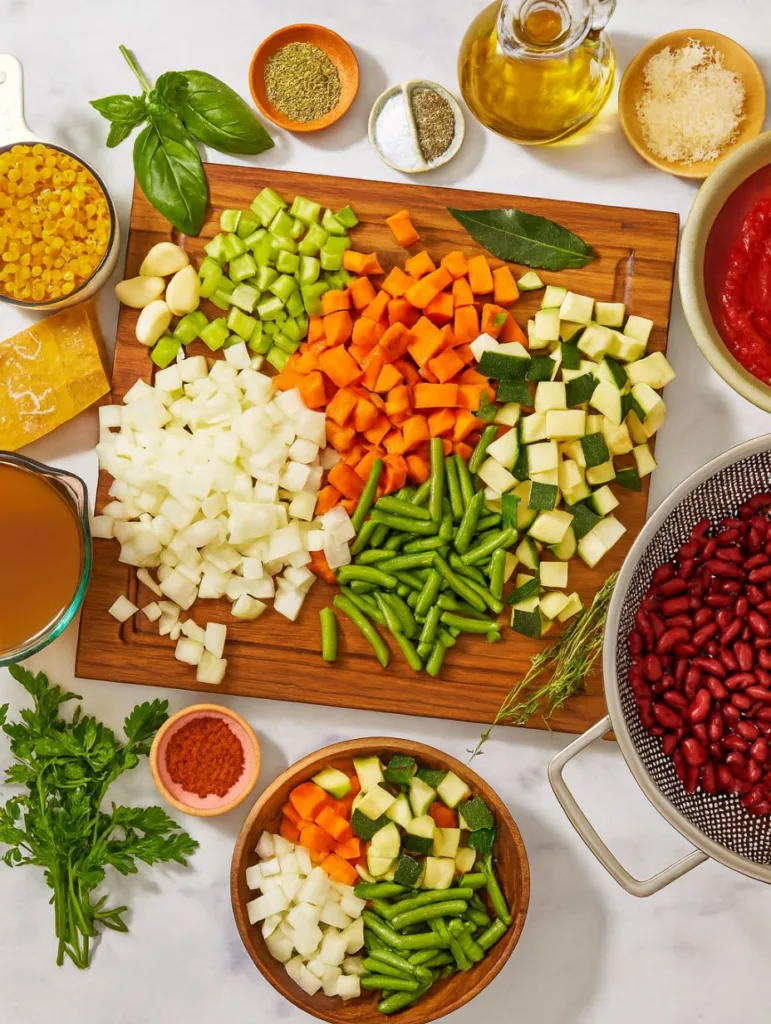
The Veggie and Pasta Balancing Act
Minestrone is all about balance. The vegetables give it color and texture, while the pasta makes it hearty. Use vegetables that hold their shape well, like green beans, zucchini, and carrots. They’ll stay tender but not mushy after simmering.
Cook your pasta separately until it’s firm, then stir it into the soup right before serving. That keeps the pasta from absorbing too much broth. If you add it too early, you’ll end up with a thick stew instead of a proper soup.
The result should be spoonfuls of pasta, beans, and vegetables swimming in a flavorful tomato base. Every bite should feel balanced and comforting.
For another recipe that balances warmth and spice beautifully, check out this Chicken Tortilla Soup with Lime. It’s proof that good layering and smart timing make all the difference.
Customizing and Storing Your Minestrone Like a Pro
Make It Your Own
The real beauty of minestrone lies in how flexible it is. You can turn this soup into something different every time you make it. It’s a dish that welcomes improvisation. If your fridge is full of vegetables that need love, toss them in. Potatoes, spinach, peas, or even diced bell peppers all work perfectly.
Want more protein? Add a scoop of white beans or lentils for extra substance. If you enjoy a hint of creaminess, swirl in a spoonful of ricotta or a sprinkle of grated cheese at the end. That’s the Italian trick for instant comfort.
For a lighter version, skip the pasta and add more beans. The soup will still feel filling and rich. On warmer days, try using smaller pasta shapes or even broken spaghetti for a lighter texture. This is one of those recipes that grows with the seasons and your pantry.
If you love hearty, adaptable dishes like this, you might enjoy Grandma’s Old-Fashioned Vegetable Beef Soup. It captures that same homestyle warmth in every spoonful.
How to Store It Right
Minestrone keeps beautifully if stored properly. Once the soup cools, transfer it to airtight containers. It will last for up to four days in the refrigerator. The flavor actually improves after a night’s rest, as the vegetables and herbs continue to blend.
If you’re planning to store it longer, freeze the broth and vegetables without the pasta. Pasta doesn’t hold up well after freezing, so keep it separate and add it fresh when reheating.
To reheat, warm the soup gently over medium heat until it’s steaming. Add a splash of broth or water if it’s thicker than you’d like. For meal prep, portion it into single-serving containers, so you can grab a quick, balanced lunch any time.
And if you’re into slow-cooked, make-ahead comfort meals, this Slow Cooker Vegan Black-Eyed Peas Stew is another must-try.
Serving Ideas and Expert Tips for Flavor and Presentation
How to Serve It Right
When your minestrone is ready, don’t rush it straight from pot to bowl. Let it sit for a few minutes so the flavors settle. This short rest makes every spoonful more balanced and aromatic.
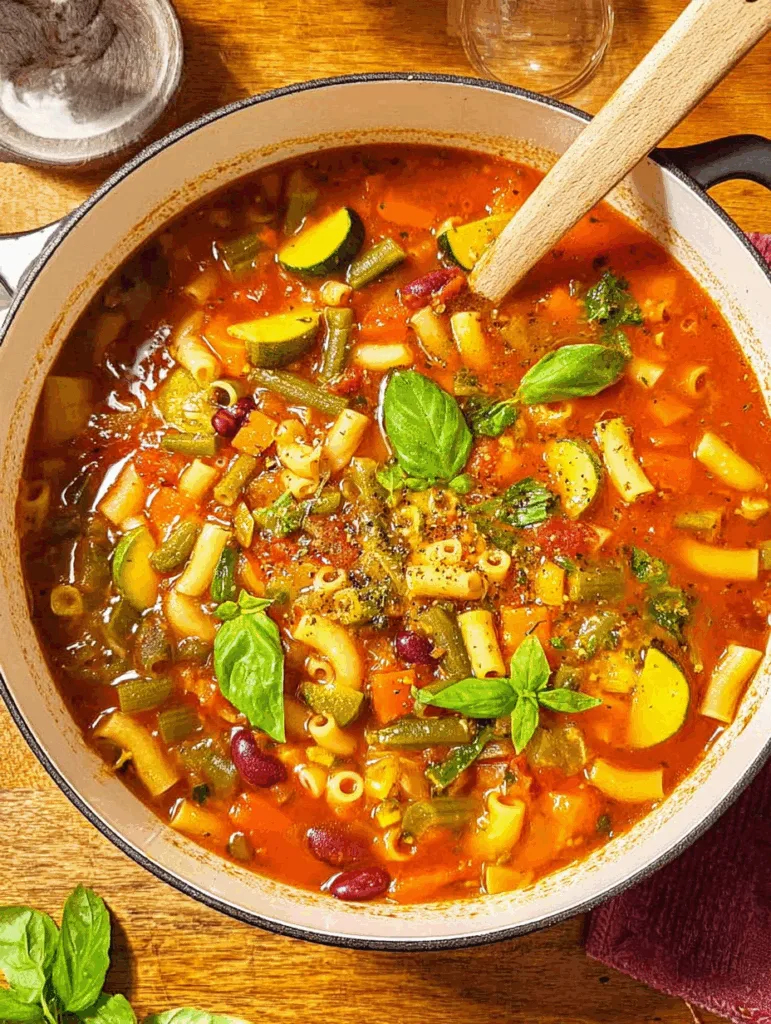
Ladle the soup into warm bowls, drizzle a bit of extra virgin olive oil on top, and finish with a sprinkle of grated cheese if you like. The drizzle adds shine and enhances the depth of flavor. If you have fresh basil, tear a few leaves and scatter them over each bowl just before serving.
Serve it with crusty bread for dipping or a side of roasted vegetables for a complete meal. A simple green salad with a lemon vinaigrette also pairs beautifully, bringing a bright contrast to the hearty soup.
If you’re serving guests, garnish each bowl with a twist of black pepper and a sprig of thyme. It looks elegant and makes the aroma pop the moment it hits the table.
Little Tricks for Bigger Flavor
A few simple moves can take your minestrone from good to unforgettable:
- Use real herbs. Fresh thyme and basil make a noticeable difference compared to dried ones.
- Add acid at the end. A squeeze of lemon or a splash of vinegar brightens the whole dish.
- Mind your salt. The flavor of the broth will intensify as it simmers, so taste before seasoning again.
- Build texture. Blend a small cup of the soup and stir it back in for a thicker, creamier body.
Each of these tricks deepens flavor without extra effort. They keep the soup vibrant and layered, just like the best Italian kitchens do it.
If you’re looking for more comforting, slow-simmered recipes with that same handmade touch, try the Creamy Corn Chowder for a smooth and rich contrast to your minestrone night.
Final Thoughts
Classic Minestrone Soup is the kind of recipe every cook should have up their sleeve. It’s adaptable, nourishing, and made entirely from simple ingredients you already trust. The trick is patience and layering. Each spoonful tells a story of humble vegetables transformed into something cozy and satisfying.
It’s a dish that turns ordinary pantry staples into a bowl of warmth worth sharing. Keep it simple, season with care, and enjoy how something so modest can taste so memorable.
FAQ
Can I make minestrone ahead of time?
Yes. It actually tastes better the next day because the flavors have more time to blend. Just store the pasta separately and combine before serving.
What pasta shape works best for minestrone?
Small shapes like ditalini, elbow, or small shells work best. They hold their texture and fit perfectly on the spoon.
Can I freeze minestrone?
Absolutely. Freeze the broth and vegetables without pasta. Add freshly cooked pasta when reheating for the best texture.
How can I make it spicier?
Add a pinch of red pepper flakes while sautéing the vegetables for a subtle heat that complements the tomato base.